
Check Columbia County Criminal History
No single database contains a full Columbia County criminal record. Start with the record’s likely custodian. Clerk Cindy Mason’s criminal docket is the best first stop for filed Superior Court charges and outcomes. Sheriff Police-to-Citizen, or P2C, can show public modules such as current custody, while the Sheriff’s Records Section supplies reports that do not appear online. Probate and city courts must be checked for traffic and ordinance matters outside the Superior Court docket.
Use a full legal name, date of birth when the official tool allows it, spelling variants, and any known case or report number. A common name alone is weak proof. Follow this sequence:
- Search the Columbia County Superior Court Clerk’s criminal docket for the filed case.
- Check the active-inmate catalog when present custody or a very recent booking is the issue.
- Contact Probate, Grovetown, or Harlem court for matters within those courts.
- Request the incident or arrest narrative from the agency that created it.
- Use a GCIC self-review and certified court disposition when identity or accuracy must be resolved.
Four Columbia County Record Systems
A docket, booking card, police report, and GCIC history answer different questions. The docket tracks the filed prosecution. A booking card describes intake and custody. An incident report gives the responding agency’s narrative, subject to lawful redaction. GCIC groups reportable Georgia arrest cycles with the outcomes agencies later send to the repository.
| Source | Best answer | Primary channel |
|---|---|---|
| Superior Court Clerk | Filed charge, docket, judgment, sentence | Clerk criminal search or counter |
| Detention Center | Current booking, bond, custody | P2C catalog or 706-541-0754 |
| Sheriff Records | Incident, arrest, accident, releasable warrant material | Public Records Center or 706-541-1042/1043 |
| GBI/GCIC | Georgia repository history | Self-review, Georgia Felon Search, or authorized fingerprints |
Compare sources before drawing a conclusion. Reporting lag and a change in charge can make records look inconsistent even when each accurately reflects a different stage.
Official Georgia Background Checks
The Georgia Bureau of Investigation operates GCIC, the state repository. Georgia Felon Search allows a public search of in-state felony convictions with first name, last name, birth date, and sex. It costs $15 for the search and another $15 to open each possible-match record. The charge applies even when no record appears. It excludes misdemeanors, juvenile felony history, and sealed or restricted data.
A possible name match is not fingerprint proof. People reviewing their own Columbia County criminal history should follow GCIC inspection and challenge steps. Fingerprint-based authorized checks use GAPS, now operated by IDEMIA/IdentoGO. The authorizing agency supplies the ORI, reason, and service code. The person registers, brings valid photo identification, and submits prints. An FBI Identity History Summary is a separate subject-only federal record review.
Each channel has a narrow scope. Georgia Felon Search is a public felony-conviction tool, not a complete Columbia County criminal record. A GCIC self-inspection is designed for reviewing and correcting one’s own Georgia file. GAPS sends authorized fingerprint results to the agency tied to the supplied code. The FBI summary reflects data sent to the federal system. None of them supplies the motions, hearing notes, or signed orders found in the local court case.
Columbia County Fingerprint Routes
The official GAPS fingerprint registration portal shows how an authorized Georgia fingerprint submission begins. Do not guess a purpose code or ORI. Those values determine where results go and why the check is allowed. For help with GAPS registration, the published assistance number is 833-542-9283.
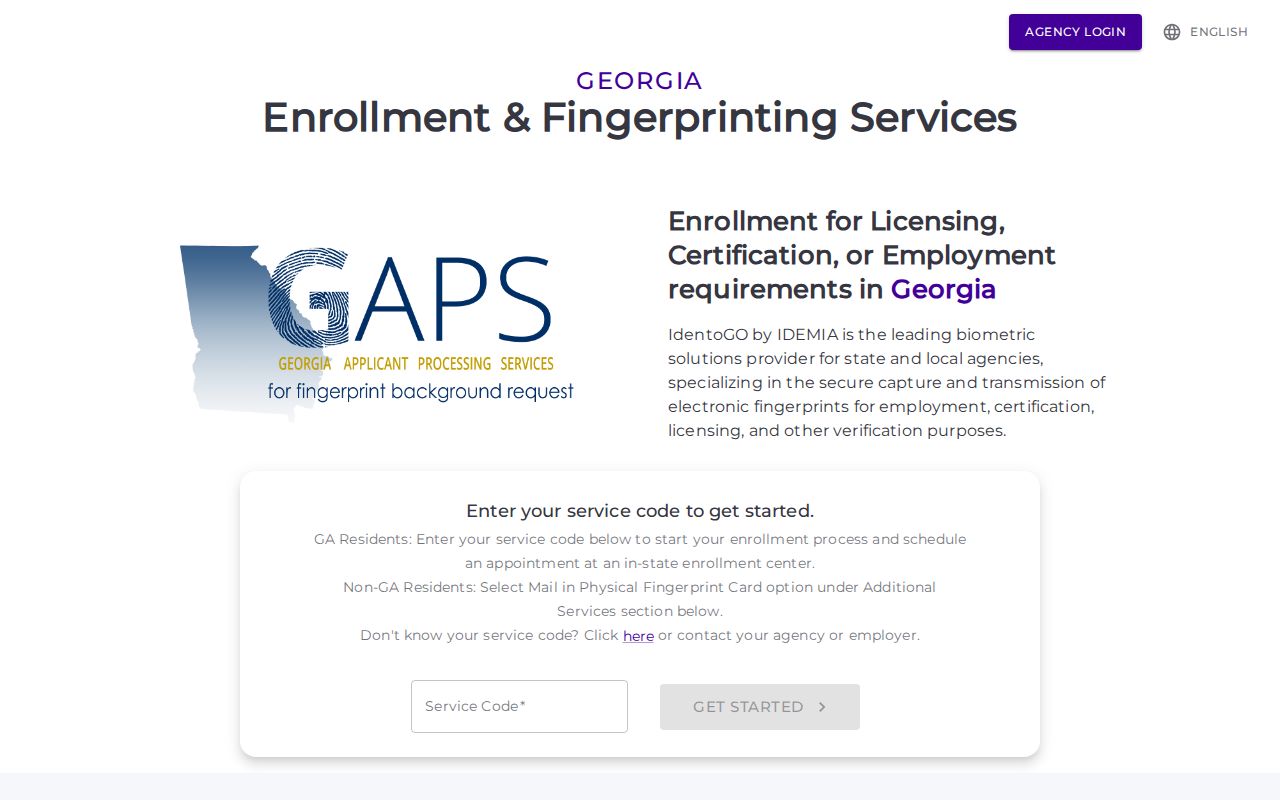
The registration screen supports an official identity-based route, not a public name search. For an individual FBI file, the FBI electronic request portal collects identity, contact, payment, and fingerprint information.
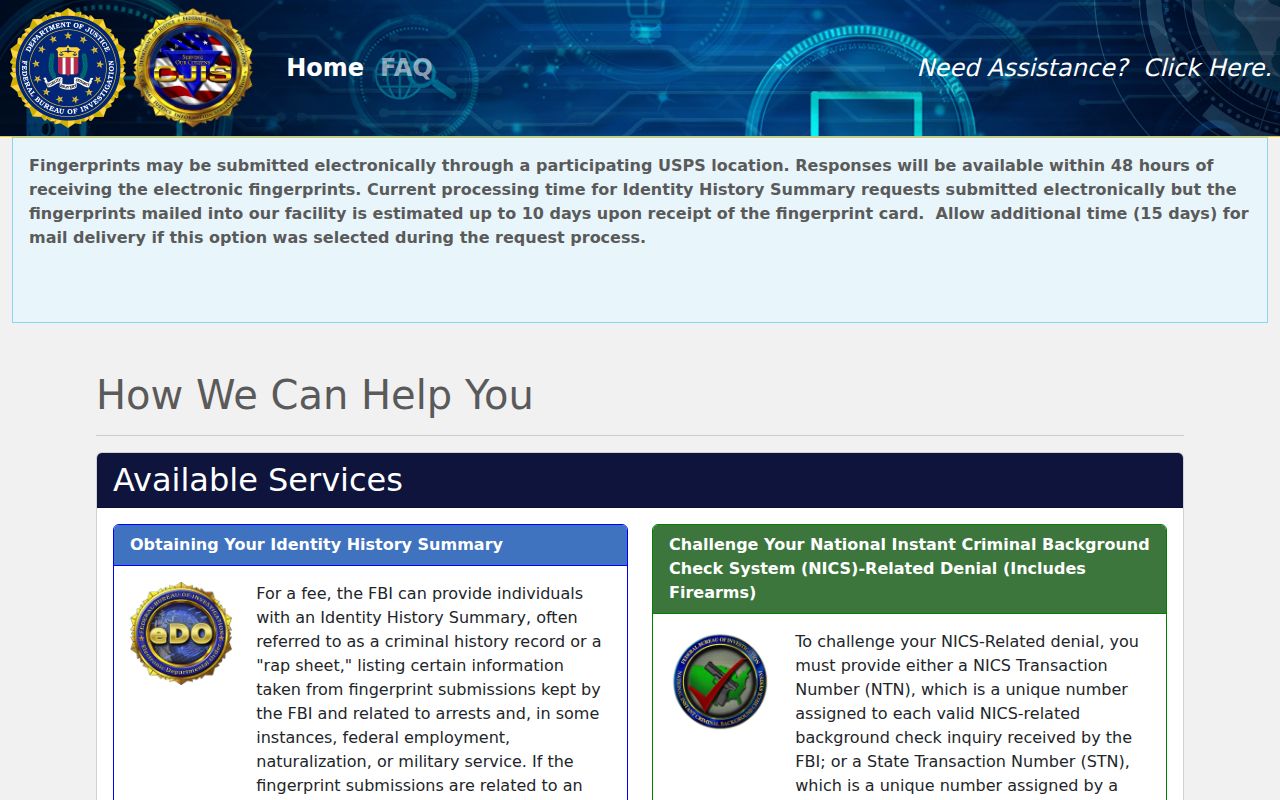
Neither result replaces the Columbia County court file. Compare a questionable entry with the arresting agency and certified disposition.
Types of Columbia County Records
Columbia County agencies create separate files as a case moves. The arresting agency writes the report. The Detention Center creates the booking entry, prints, photo, property record, bond data, and release data. Magistrate Court creates warrant, first-appearance, and bond material. The prosecutor files an accusation or presents a felony matter to the grand jury. The clerk then preserves the public docket, pleadings, judgment, and sentence.
- Arrest and incident records: facts recorded by the Sheriff, city police, state patrol, school police, or another agency.
- Booking records: intake charges and custody facts, not proof of guilt.
- Court files: filed charges, hearings, motions, outcome, and sentence.
- Warrant records: court authority for arrest or search, with sealed and juvenile limits.
- Supervision and registry records: separate state and county duties after a sentence or qualifying conviction.
Columbia County Docket Search
The clerk’s criminal-search interface accepts a case number, party name, or CSE number. Choose Criminal Search, run the query, then use the plus control beside a result to expand its docket. CSE mainly relates to support matters, so party name or exact criminal case number will often be more useful. A broad party search can return namesakes. Verify the court, filing year, charge entries, and disposition.
| Control | Use | Required | Reading tip |
|---|---|---|---|
| Criminal Search | Select criminal database | Yes | Do not remain on Civil Search |
| Case number | Exact local identifier | No | Best when copied from a notice |
| Party name | Name search | No | Confirm identity in the expanded docket |
| CSE number | Available docket input | No | Mainly tied to support matters |
| Plus control | Expand result | No | Reveals docket entries |
The interface does not promise free document images. When an order or pleading is absent, ask the Clerk of Superior Court for a copy.
What Columbia County Records Show
The meaning of a field depends on its source. A booking charge reflects intake. A prosecutor’s accusation or indictment states the filed charge. The judgment supplies the final outcome. Repository history may group the same event as an arrest cycle and can lag if an agency has not yet sent the disposition.
Start with the event date and agency when two records seem hard to match. A tracking number, booking number, warrant number, and court case number can all refer to the same episode while serving different systems. Dates may also differ because arrest, filing, plea, and judgment occur on separate days. The most reliable approach is to trace the chain, preserve each identifier, and use the signed disposition to resolve the result of a filed charge.
| Name and identifiers | Legal name, aliases, birth date, sex, race, state ID, and sometimes FBI number. |
|---|---|
| Arrest and booking | Agency, date, tracking or booking number, intake charge, bond, and release. |
| Filed case | Case number, court, accusation or indictment, filing date, judge, and docket events. |
| Disposition | Guilty, acquitted, dismissed, nolle prosequi, no bill, or another recorded result. |
| Sentence | Custody, probation, fines, restitution, and other court-ordered terms. |
| Supervision | Published custody or probation/parole status where law and the source permit. |
Columbia County Jail Record Limits
The Detention Center is rated for 358 people and processes about 4,000 intakes each year. Those figures explain why an active roster cannot serve as a historic arrest index. The official catalog shows current custody. A missing name can mean release, transfer, delayed entry, custody elsewhere, or a spelling difference.
Grovetown and Harlem do not advertise separate city jails. Their city arrests can reach the Columbia County Detention Center, even though the incident narrative remains with the city police department. This split is easy to miss. Search current county custody first, then request the report from the arresting city and the final disposition from the court that received the charge.
The Sheriff Police-to-Citizen portal is the verified mobile-browser route for public modules that are currently exposed.
If P2C shows no active inmate, call the Detention Center at 706-541-0754. Then request a historical booking record through Sheriff Records. Once a sentenced person moves into state custody, use GDC Find an Offender.
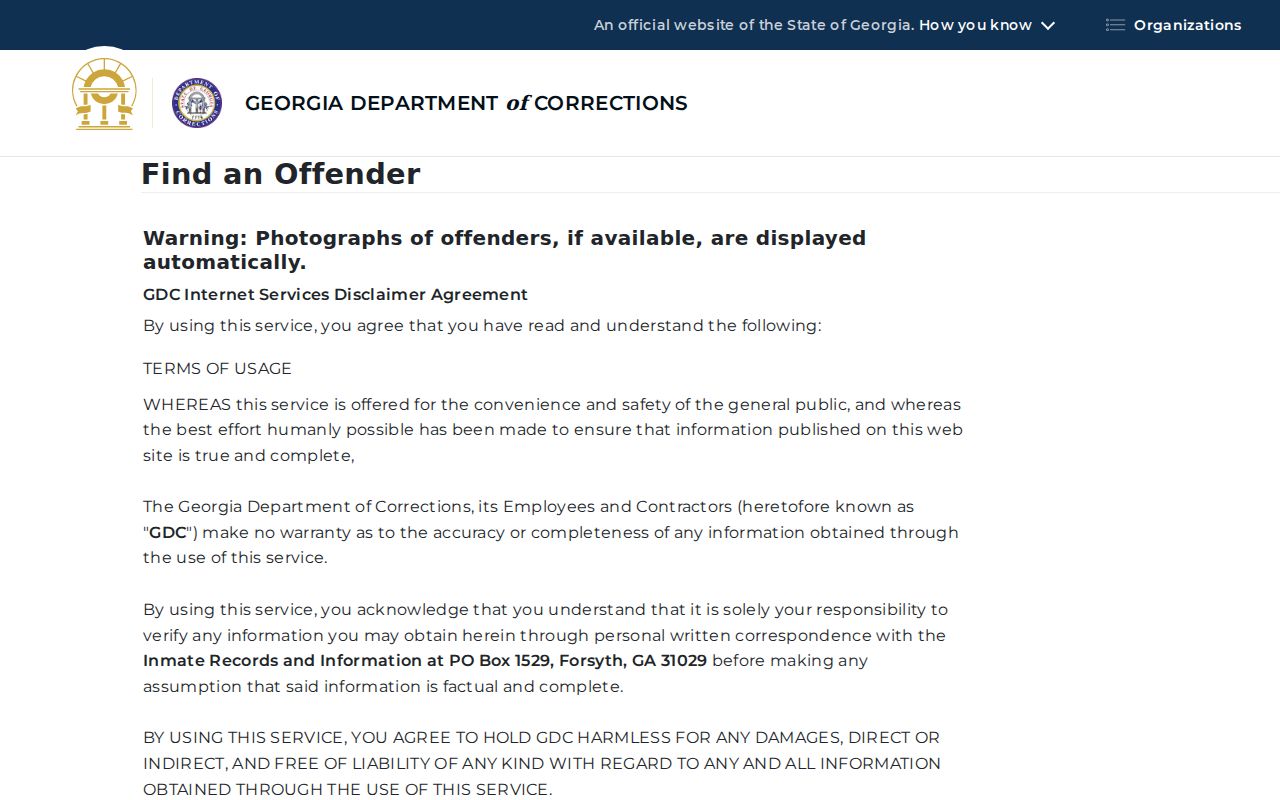
GDC records describe state custody. They do not replace the local arrest narrative or court judgment.
Columbia County Public Access Laws
The Georgia Open Records Act favors inspection of agency records, but each requester must contact the actual custodian. Columbia County’s general request portal does not produce court files. The clerk handles dockets and copies. The Sheriff’s portal covers Sheriff-maintained reports and administrative records. A three-business-day response can provide records, a timetable and estimate, or a legal reason for withholding. It does not guarantee final production within three days.
Key Georgia laws:
O.C.G.A. § 50-18-70 sets the open-records policy. Section 50-18-71 governs response and copying mechanics. Section 50-18-72 lists exemptions, including protected investigative and personal data. O.C.G.A. § 35-3-35 governs GCIC dissemination. O.C.G.A. § 35-3-37 governs correction, restriction, and related sealing.
Public access does not turn an accusation into proof. Check identifiers and the case outcome before relying on a portal result.
Make a narrow request when the file may contain audio, video, or a long investigation. A clear date range, location, officer or unit, and exact record type helps the custodian find responsive material and can reduce lawful review cost. If part of the file is withheld, the response should identify the legal basis. Ask whether a redacted copy or segregable public portion can still be produced.
Columbia County GovQA Requests
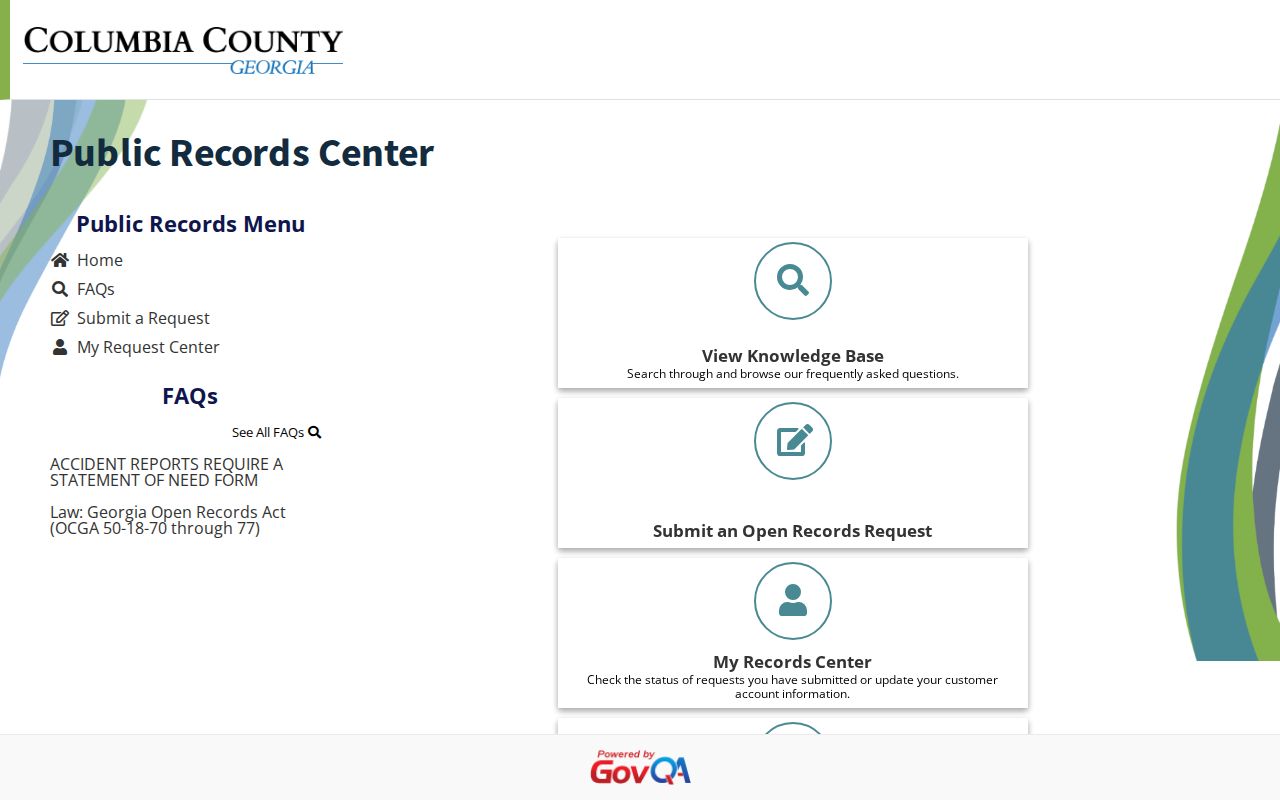
The Sheriff’s Records Section is the main fallback for incident, arrest, accident, and releasable booking material. Requests go through the county open-records instructions and MyCustHelp Public Records Center. Give the event date and time, location, names, agency, and report number if known. Ask separately for a report, CAD log, audio, photographs, video, or booking file because each requires its own review.
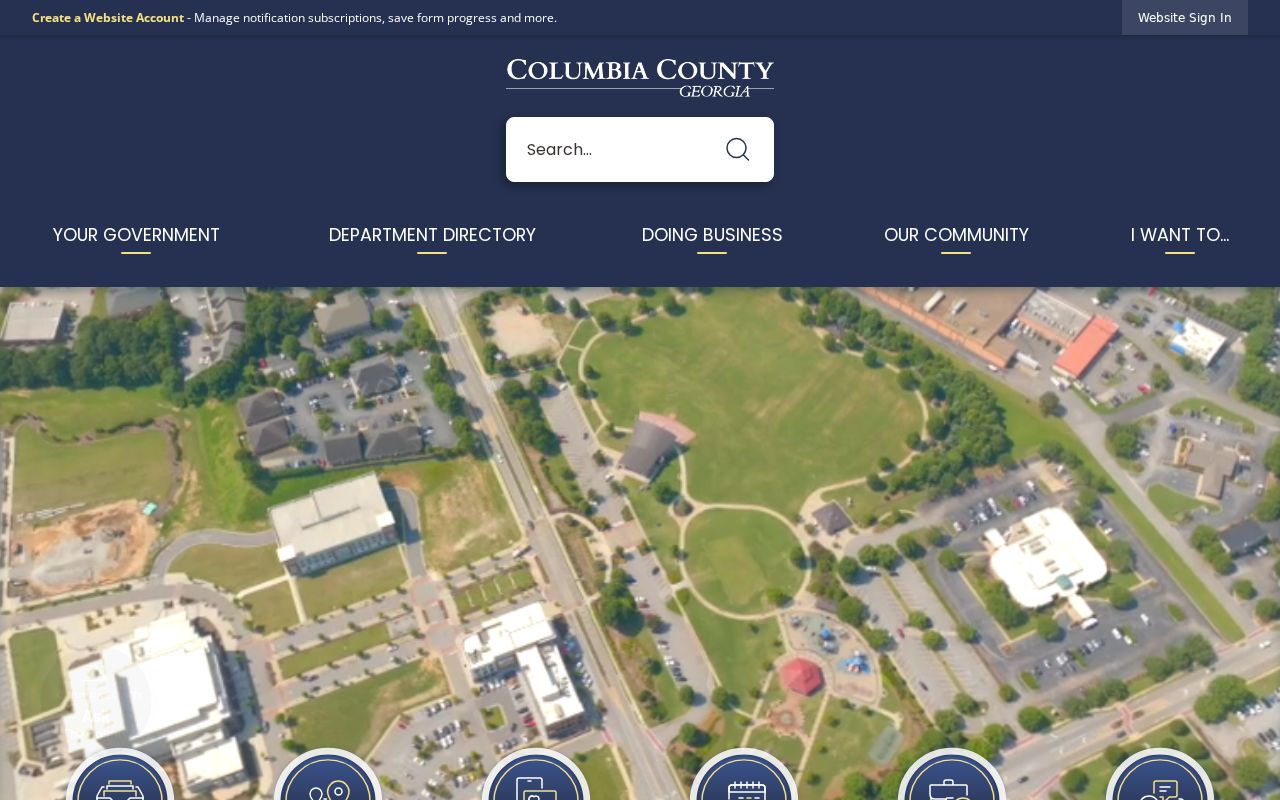
The instructions route the request to the right office and explain that court records stay with the courts. The linked Public Records Center supports submission and tracking.
Paper copies may cost up to ten cents per page. Extensive retrieval may be billed at the lowest-paid qualified employee’s hourly rate, while email can avoid print cost.
Columbia County Warrants and Courts
No complete official public active-warrant database was verified. A Most Wanted list is selective, so no result proves little. Safely verify through Sheriff dispatch at 706-541-2800, Sheriff Records at 706-541-1042 or 1043, or the issuing court. Magistrate Court at 706-868-3316 handles many warrant applications and is available to law enforcement around the clock.
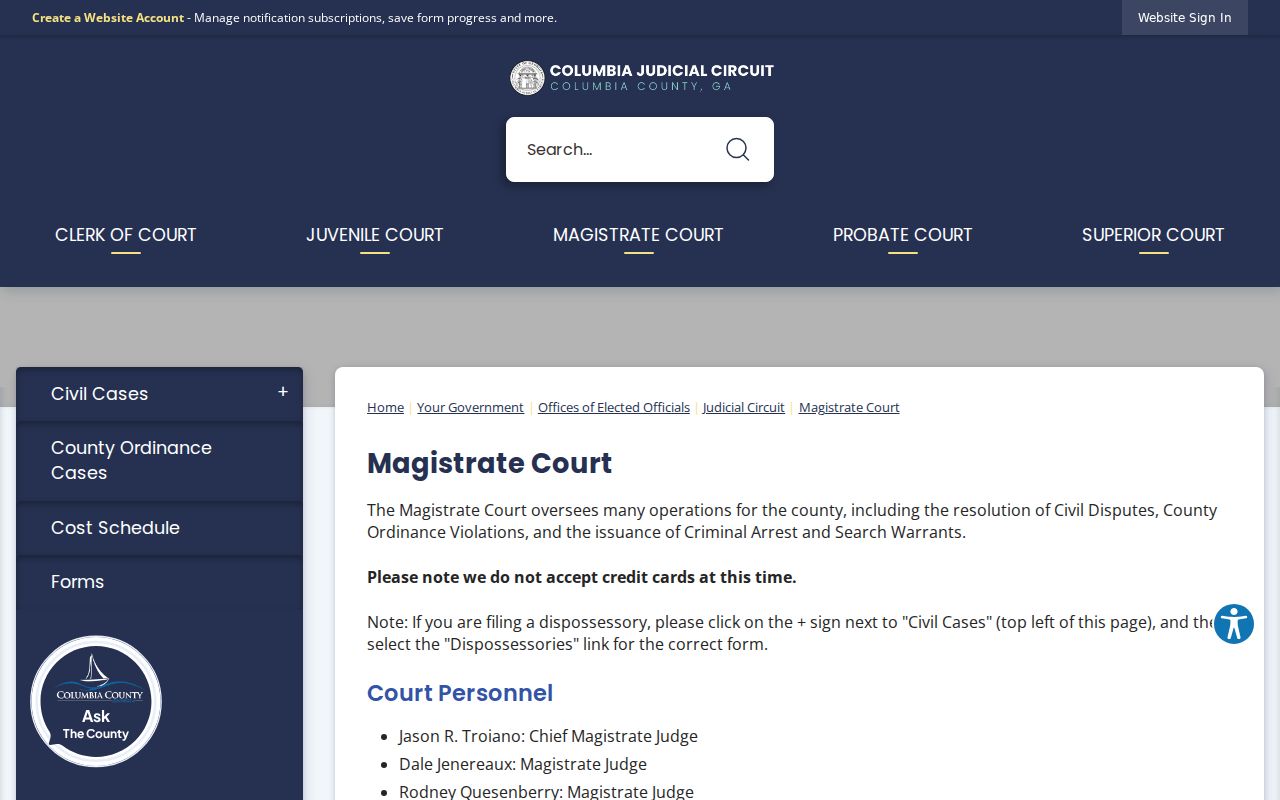
The Magistrate Court information page explains warrants, first appearances, preliminary hearings, and bond.
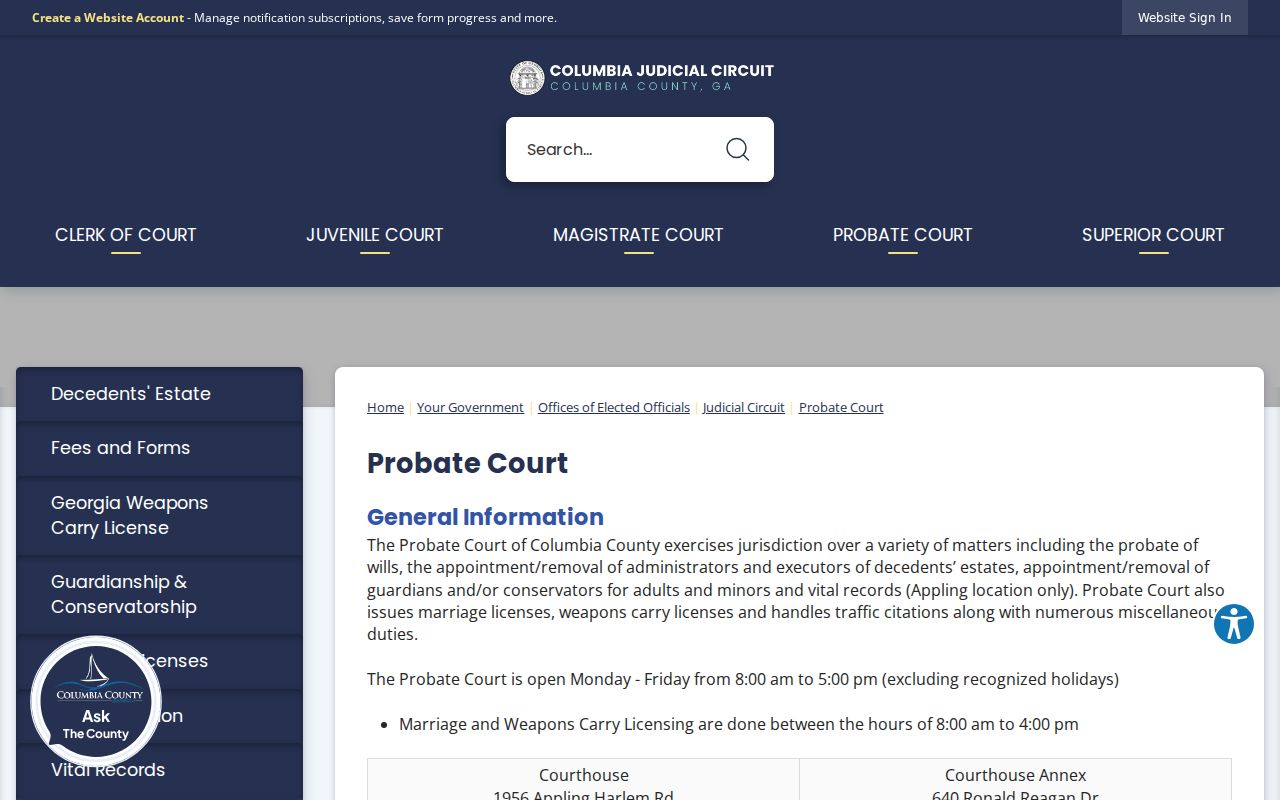
Probate Court holds traffic matters from the Sheriff, Georgia State Patrol, Motor Carrier Compliance, and DNR. Its official access page identifies service in Evans and Appling.
Never send GreenDot or Western Union funds to a caller who claims a warrant. Confirm the court and case through published numbers.
Restricted, Sealed and Expunged Records
Georgia uses the term record restriction. It limits public GCIC dissemination but does not mean that every file was destroyed. Court sealing is related and distinct. A person may need both a qualifying restriction and a court order before public docket access changes. Authorized criminal justice access can remain, and separate rules protect juvenile files, victim identity, account data, Social Security numbers, and sealed warrants.
Begin with a personal GCIC review. Identify the arrest cycle, arresting agency, court, and disposition. Obtain the court outcome, determine whether restriction was automatic or needs an application or petition, and use the route that fits that disposition. Then verify GCIC and the public court view separately. Dismissal, acquittal, no bill, and some unprosecuted arrests can qualify, but exceptions apply.
Columbia County Case Vocabulary
Short docket terms can change the meaning of a Columbia County criminal record. Read the actual order whenever first-offender treatment or restriction is involved.
- Accusation
- A prosecutor-filed charging document used for misdemeanors and some eligible felonies.
- Indictment
- A formal felony charge returned by a grand jury.
- Nolle prosequi
- The prosecutor’s formal choice not to proceed with a charge at that time.
- No bill
- The grand jury declined to indict the charge presented.
- Disposition
- The recorded result of a charge or case.
- First-offender treatment
- A qualifying Georgia process that may avoid adjudication of guilt after successful completion.
The Columbia County Victim Assistance page describes the local path through warrant, preliminary hearing, grand jury, arraignment, and later proceedings.
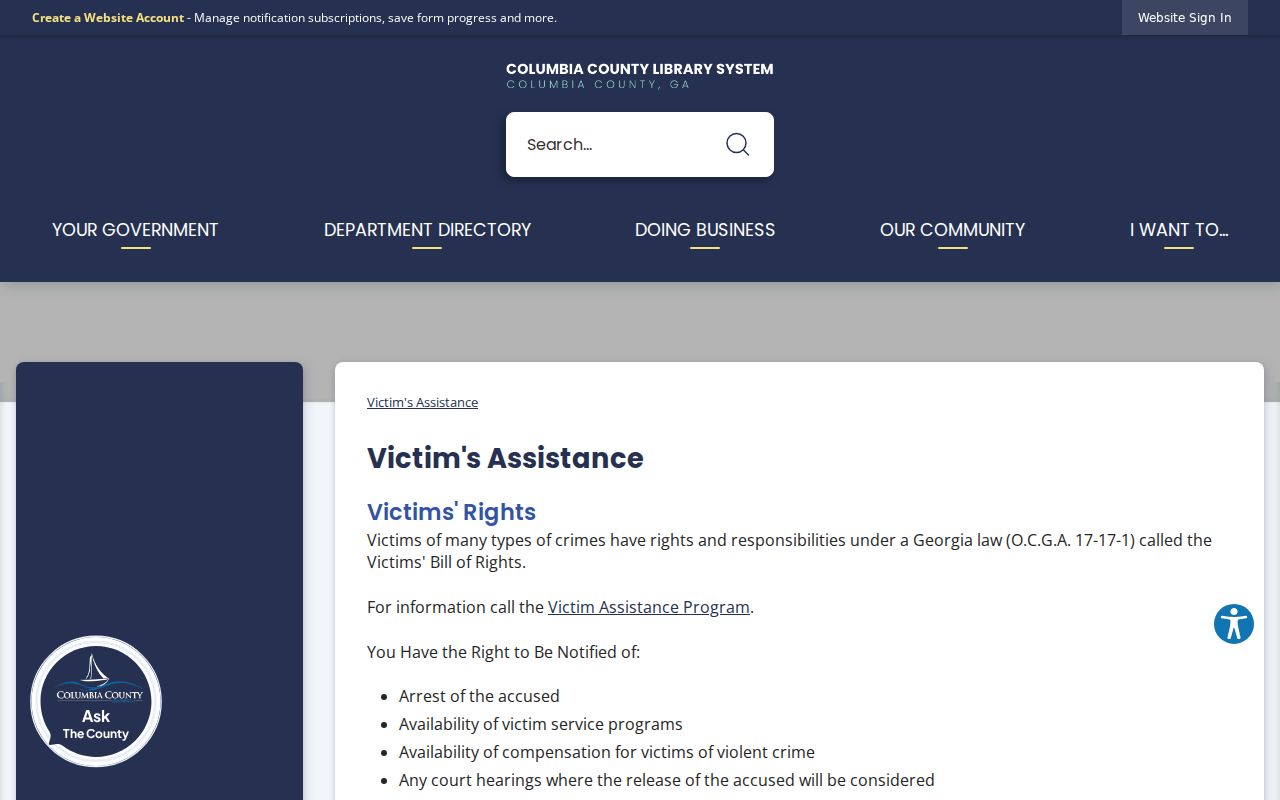
That sequence helps place each docket entry in context. A filed charge is not the same as a judgment.
Columbia County Record Offices
Most current court service occurs in Evans even though Appling remains the county seat. Call before travel. The Sheriff’s current site gives 2269 County Camp Road, while older official forms give 2273. The four-number conflict is a reason to confirm the entrance.
Superior Court Clerk
640 Ronald Reagan Drive
Evans, GA 30809
706-312-7139
Weekdays, generally 8:00 a.m. to 5:00 p.m.
Sheriff Records
County Camp Road
Appling, GA 30802
706-541-1042 or 1043
Monday through Friday, 8:00 a.m. to 5:00 p.m.
Magistrate Court
640 Ronald Reagan Drive
Evans, GA 30809
706-868-3316
Warrants, first appearances, bond, and preliminary matters.
City-by-City Columbia County Records
Columbia County has two incorporated cities. Evans is a census-designated place, not a city, so it has no city police department or municipal court. Grovetown and Harlem keep their own police reports and municipal court records, while their bookings generally reach the county jail.
Grovetown Record Check
Use Grovetown Public Safety for city reports, Grovetown Municipal Court for ordinance and traffic outcomes, and the county jail for city bookings.
Harlem Record Check
Use Harlem Police for routine reports, the municipal clerk for dispositions, and Columbia County channels for detention and county-court cases.